

Watching someone you love become angry or frustrated because of dementia can be difficult. A parent who was always patient may suddenly snap over a simple question or refuse help...
Read more

Memory changes and cognitive decline can become part of the aging process for some older adults. For seniors living with Alzheimer’s disease, dementia, or another cognitive condition, having the right level of support can make a meaningful difference in daily life.
This is where memory care services for seniors can help. They provide a safe, structured, and compassionate environment that supports residents’ well-being and quality of life. Families exploring care options often ask, “What services does memory care provide?” At Liana of Sarasota, our community offers personalized assistance, a secure environment, trained care partners, meaningful activities, and ongoing support for families. Let’s explore five key benefits of memory care services and how they can support residents and their loved ones.
One of the greatest benefits of memory care is the personal approach to support. Every senior has a different life story, routine, personality, and level of need. Because cognitive changes can develop over time, care should be flexible enough to change with them.
At Liana of Sarasota, we work closely with care partners to assess the needs of their loved ones and create a care plan that is both flexible and effective.
Personalized care makes it possible to provide the right level of support without overlooking what a resident can still do independently. Whether someone is experiencing early memory changes or living with more advanced Alzheimer’s disease, care partners offer assistance with patience, dignity, and respect.
Support may include help with personal care, daily routines, meals, medication management, and other cognitive or physical needs. As a resident’s condition changes, the care plan can be adjusted to continue providing appropriate support.
For families, this consistency brings peace of mind. They can feel confident that their loved one is receiving care that reflects their current needs rather than a one-size-fits-all approach.
When families begin to wonder whether it may be time for memory care, safety is often one of their main concerns. Cognitive decline can increase the risk of confusion, falls, and other situations that may be difficult to manage at home.
Memory care communities are carefully designed to reduce these risks while still giving residents room to move, participate in activities, and enjoy their daily routines.
Memory care communities are designed with safety measures in mind, from secure entrances and exits to 24/7 monitoring. Seniors are given the freedom to move about, but in a controlled environment where their well-being is always ensured. Knowing that their loved one is in a protected environment provides peace of mind for families.
In addition to physical safety, memory care services often incorporate health monitoring systems to detect changes in a senior’s condition. This proactive approach helps prevent accidents and ensures that any health concerns are addressed promptly, further promoting the well-being of each individual.
Another important benefit of memory care is having support from professionals who understand cognitive decline. Memory care requires more than help with daily tasks. It also requires patience, empathy, and an understanding of how dementia can affect communication, emotions, behavior, and daily routines.
At Liana of Sarasota, care partners receive training in dementia care and other cognitive conditions. This helps them provide thoughtful care that reflects each resident’s individual needs.
Memory care services are about more than helping with daily routines. They provide residents with steady, compassionate support from people who understand how memory loss can affect emotions, communication, and behavior.
When a resident feels anxious or overwhelmed, trained care partners know how to respond with patience and reassurance. Over time, they learn each person’s routines, preferences, personality, and the small details that help them feel safe and comfortable.
These familiar relationships can bring residents a stronger sense of trust and connection. For families, it is comforting to know their loved one is surrounded by people who understand their needs and treat them with kindness, dignity, and respect.
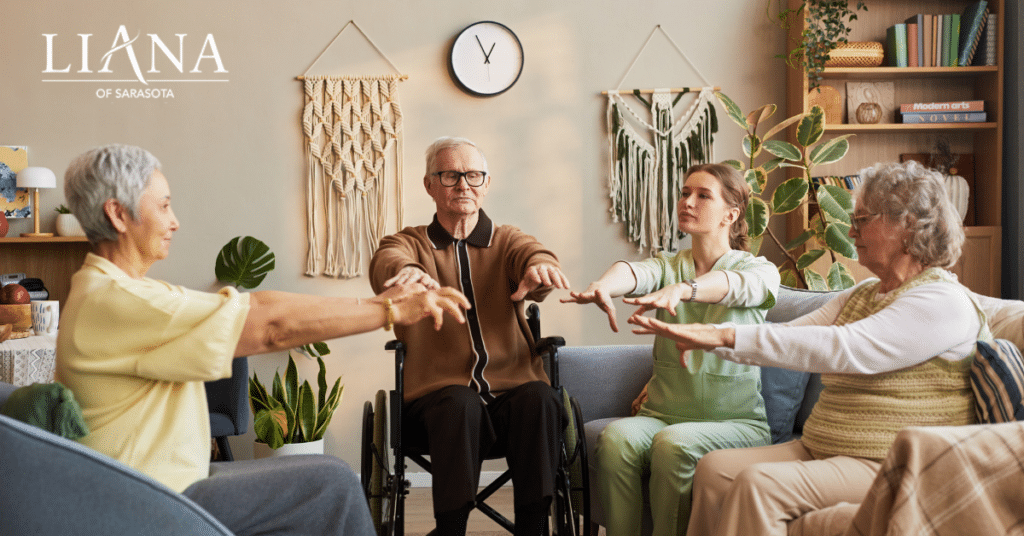
Social connection and meaningful activity remain important for people living with memory loss. At Liana of Sarasota, residents are encouraged to participate in programs that foster connection, creativity, movement, and enjoyment.
Memory care activities are designed to match each resident’s interests and abilities, helping them remain involved without feeling pressured or overwhelmed.
Group activities such as music, art, games, gentle exercise, and conversation give residents opportunities to spend time with others and feel part of a community. These interactions can help reduce feelings of isolation and bring more purpose and enjoyment to the day.
Cognitive activities may include puzzles, memory exercises, storytelling, sensory programs, or simple problem-solving tasks. The goal is not to test residents or focus on what they have lost. Instead, activities are chosen to encourage participation, support existing abilities, and create positive experiences.
When activities feel familiar and enjoyable, they can improve mood, spark memories, and help residents feel more connected to the people around them.
While memory care services provide exceptional care for seniors, they also offer valuable support to families and care partners. Caring for a loved one with cognitive decline can be emotionally and physically taxing, and families often feel overwhelmed by the responsibilities involved. Memory care services help by providing emotional support and resources for families.
At Liana of Sarasota, families remain an important part of their loved one’s care. Care partners can provide updates, answer questions, and help families better understand the changes their loved one may be experiencing.
Support may also include guidance on communication, education about dementia, and advice for making visits more comfortable and meaningful. This can help families feel less alone as they adjust to changes in their loved one’s condition.
Memory care can also reduce the pressure of providing constant hands-on support. With daily care handled by a trained team, family members can spend more time connecting with their loved one as a spouse, child, sibling, or friend.
Memory care services give seniors a place where they can feel safe, understood, and supported each day. With personalized care, meaningful activities, a secure setting, and compassionate care partners, residents can continue to experience comfort, connection, and a sense of belonging.
At Liana of Sarasota, we create a welcoming community where people living with memory loss are treated with patience, dignity, and respect. We also support families throughout the process, helping them feel informed and confident in the care their loved one receives.
Schedule a personal tour to learn more about our community and how we can support your loved one.
Watching someone you love become angry or frustrated because of dementia can be difficult. A parent who was always patient may suddenly snap over a simple question or refuse help...
Read more
Daily life can change significantly when an older adult is living with dementia. Things that once happened automatically, such as getting dressed or having meals, may require more guidance over...
Read more
Living with dementia can change how a person communicates, participates in daily activities, and connects with the people around them. For families, finding meaningful ways to support a loved one...
Read more
Watching someone you love become angry or frustrated because of dementia can be difficult. A parent who was always patient may suddenly snap over a simple question or refuse help...
Read more
Daily life can change significantly when an older adult is living with dementia. Things that once happened automatically, such as getting dressed or having meals, may require more guidance over...
Read more
Living with dementia can change how a person communicates, participates in daily activities, and connects with the people around them. For families, finding meaningful ways to support a loved one...
Read more